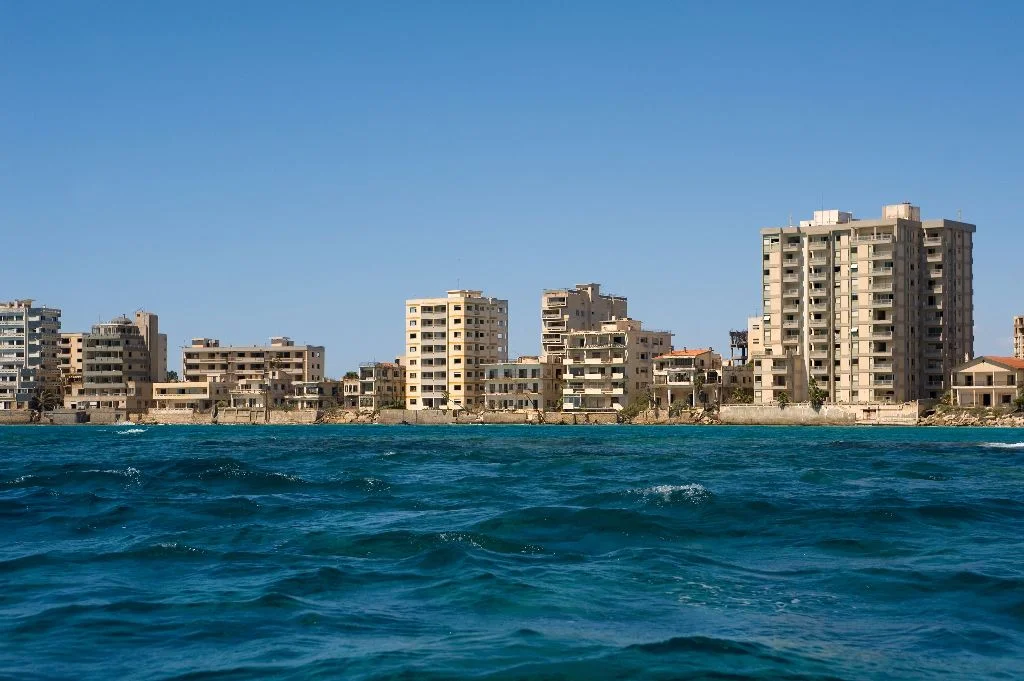
Explore the mysterious story of Varosha, Famagusta’s ghost town — once a luxury resort, now a window into Cyprus’s divided history. Famagusta’s Ghost Town (Varosha): What You Need to Know Once the crown jewel of Cyprus’s tourism industry, Varosha in Famagusta now stands as one of the most hauntingly beautiful places on the island. Known as the “Ghost Town of Cyprus,” it tells a story of lost glamour, frozen time, and political division — making it a must-visit for anyone interested in the island’s history and identity. 1. The Glamorous Past Before 1974, Varosha was one of the Mediterranean’s most famous resorts. Celebrities like Elizabeth Taylor, Brigitte Bardot, and Richard Burton vacationed there. Its coastline was lined with luxury hotels, cafés, and boutiques — a symbol of Cyprus’s golden age of tourism. But that all changed in the summer of 1974, when the area was abandoned overnight during the conflict that divided Cyprus. Since then, time has stood still within its crumbling buildings and silent streets. 2. What Happened in 1974 After the events of 1974, Varosha was fenced off and left uninhabited for nearly five decades. The area became part of the military zone controlled by the Turkish forces, completely closed to the public. Nature slowly began to reclaim the city — trees grew through hotel lobbies, cars rusted in the streets, and shop windows froze in the past. 3. Reopening to Visitors In 2020, parts of Varosha were reopened to the public for the first time in nearly 50 years. Visitors can now walk or cycle through certain areas of the district, including parts of Democracy Street and the Glossa Beach area. Although entry to some buildings is still restricted, the reopened zone offers a rare and powerful glimpse into a living museum of history. 💡 Tip: Bring water and comfortable shoes — much of the area is only accessible by foot or bike, and the sun can be intense. 4. What You’ll See Today Visiting Varosha is like stepping back in time. You’ll find: Empty hotels with broken balconies and faded signs Overgrown gardens and cars frozen in the 1970s Glossa Beach, now open for swimming with lifeguards and facilities Informational panels explaining the area’s history and context Photography is generally allowed, but visitors are expected to respect all restricted zones and signs. 5. Why It Matters Varosha is more than a tourist site — it’s a symbol of Cyprus’s divided history and a reminder of the importance of peace and coexistence. For students and visitors alike, it’s a place to reflect on how conflict shapes communities and memories. 6. How to Visit Varosha is located on the southeastern coast of Cyprus, near Famagusta (Gazimağusa). Entry is currently free, and the area is open daily, though hours may vary by season. 💡 Tip: Combine your visit with nearby attractions such as the Othello Castle, Lala Mustafa Pasha Mosque, and the Famagusta Old Town walls — all within a short drive. A Walk Through Time Exploring Famagusta’s Ghost Town is an unforgettable experience — both eerie and deeply moving. It’s a rare chance to see history preserved in silence, where every building tells a story of hope, loss, and resilience.

Famagusta’s Ghost Town (Varosha)

03.11.2025


Category: Article

Explore the mysterious story of Varosha, Famagusta’s ghost town — once a luxury resort, now a window into Cyprus’s divided history.

Once considered the crown jewel of Cyprus’s tourism industry, Varosha in Famagusta now stands as one of the island’s most haunting and evocative places, a silent testament to its complex history and identity. Known widely as the “Ghost Town of Cyprus,” Varosha was once a glamorous Mediterranean hotspot, attracting world-famous celebrities such as Elizabeth Taylor, Brigitte Bardot, and Richard Burton to its luxurious hotels, chic cafés, and elegant boutiques. This vibrant era came to an abrupt end in 1974, when the area was abandoned overnight during the conflict that divided the island, leaving its buildings, streets, and coastline frozen in time.

For nearly five decades, Varosha remained sealed off as part of a military zone, untouched by residents and slowly reclaimed by nature as trees grew through hotel lobbies and rusted cars sat undisturbed on empty streets. In 2020, parts of the district reopened to visitors, offering a rare opportunity to walk or cycle through sections such as Democracy Street and Glossa Beach, where the sea remains as beautiful as ever even as the surrounding structures tell a stark story of abandonment. Today, visitors encounter crumbling hotels, faded signs, and overgrown gardens—powerful visual reminders of a vibrant past abruptly halted. Informational panels help contextualize the site’s history, while accessible areas like Glossa Beach allow a blend of reflection and relaxation.

More than a tourist attraction, Varosha represents a profound symbol of Cyprus’s divided past and a reminder of the need for peace and coexistence. Located near Famagusta on the island’s southeastern coast, it is free to visit and open daily, making it a compelling stop for those seeking to understand Cyprus more deeply, especially when paired with nearby landmarks such as Othello Castle, the Lala Mustafa Pasha Mosque, and the historic Famagusta Old Town walls.

A Walk Through Time

Exploring Famagusta’s Ghost Town is an unforgettable experience — both eerie and deeply moving. It’s a rare chance to see history preserved in silence, where every building tells a story of hope, loss, and resilience.